
Chris Mendez | Design Leader
Most teams don’t have a design problem. They have a clarity problem.
I didn’t start in tech. I started at Ogilvy—where you learn quickly that even strong ideas fall apart if they’re not expressed clearly.
You could feel it in the room: a smart strategy buried, a good idea not landing. Then someone reframes it—simpler, sharper—and everything clicks.
That stuck with me.
Because years later, working on complex B2B platforms, I kept seeing the same thing play out. Different medium, same issue.
Teams weren’t stuck because they lacked talent. They were stuck because the system didn’t make sense.
That’s the work I’ve gravitated toward ever since.
If it doesn’t make sense, it doesn’t become anything.
Across VidMob and TripleLift, the work has rarely started with clean problems.
It starts with fragments, signals, and capabilities in search of meaning.
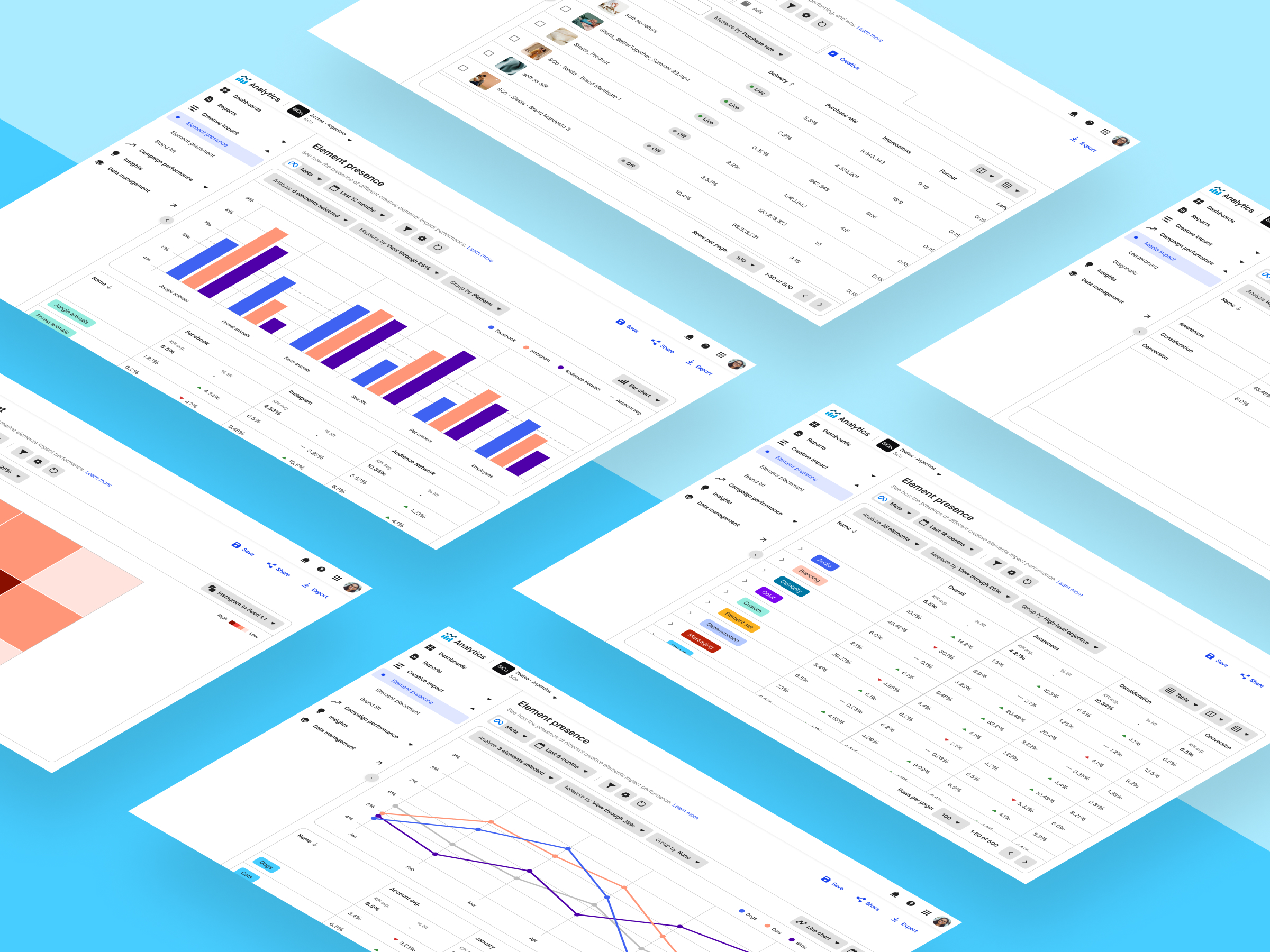
At VidMob, I worked on early AI systems where the intelligence was already there—but it wasn’t usable.
The challenge wasn’t building models; it was defining how the outputs should show up—how insights are framed, how they connect, and how they influence decisions.
At TripleLift, the challenge was different but familiar.
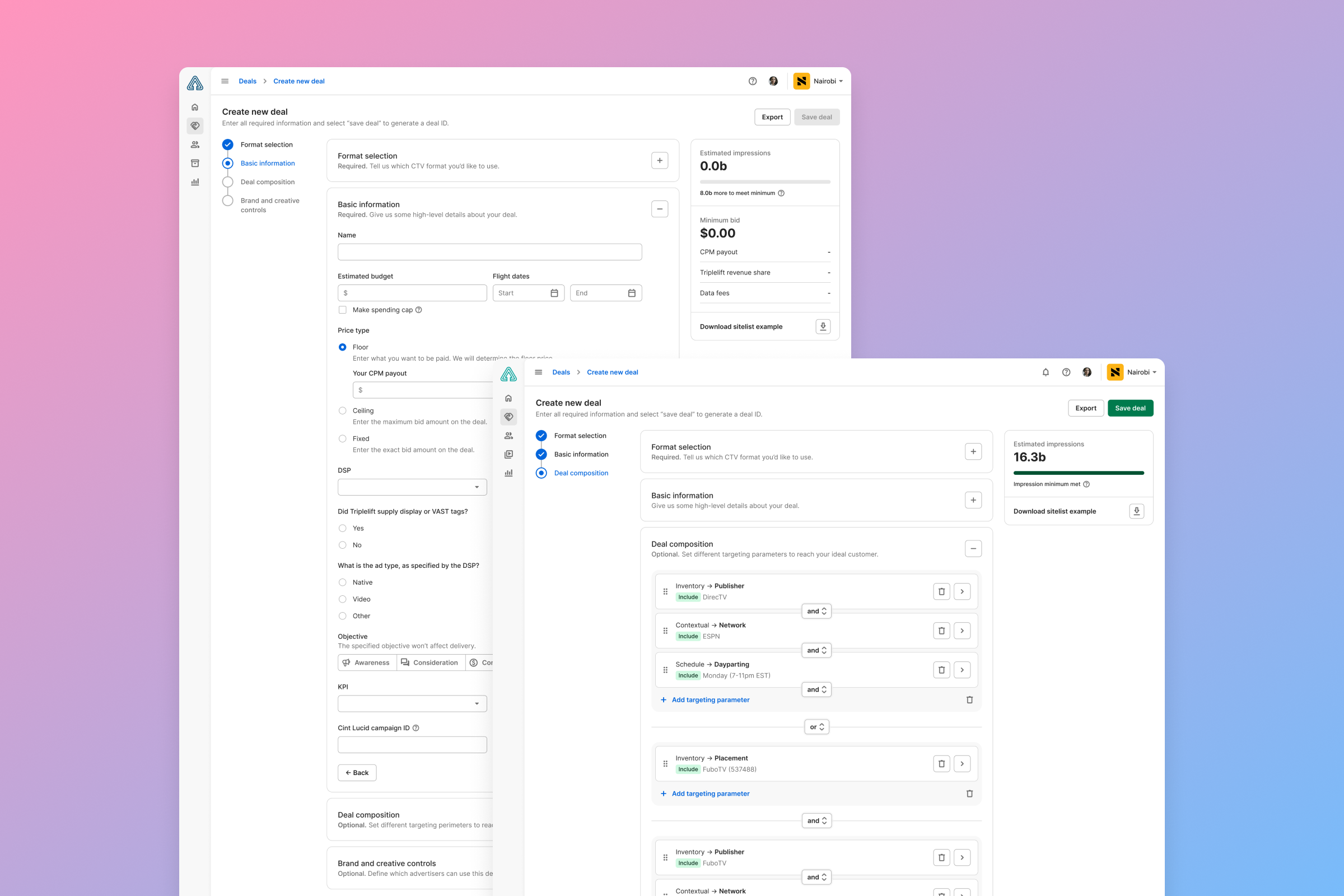
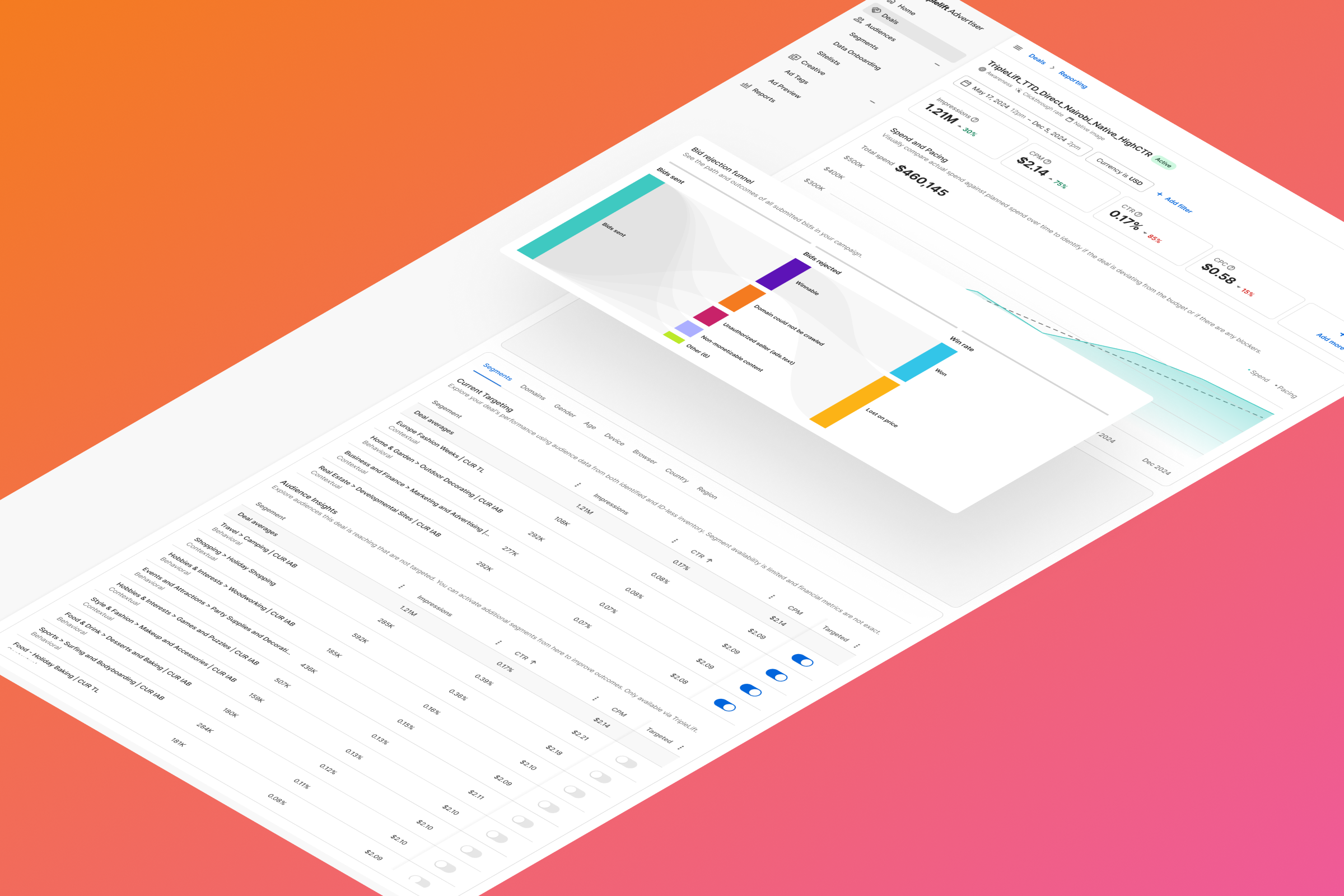
The platform had strong parts, but no clear center of gravity.
The work shifted from adding features to defining the system—what the core objects are, how buyers and sellers interact, and where value actually lives.
Clarity isn’t simplification—it’s structure.


If it doesn’t feel right, people won’t trust it.
Clarity gets you to an answer. Craft determines whether it holds.
I’ve always cared about how things feel—not just visually, but in how they behave.
The rhythm of an interaction, the consistency across moments, and the way a system responds when you push on it.
In complex platforms, that bar matters more.
Without it, everything starts to feel fragile.
Workflows break down, edge cases pile up, and trust erodes.
That’s especially true with AI.
When systems generate, adapt, and evolve, the experience can’t just be functional—it has to be legible and intentional.
Craft isn’t decoration—it’s how systems earn trust.
If the work doesn’t connect, it doesn’t scale.
Good ideas don’t fail on their own—they fail in the gaps between teams.
Over time, I’ve taken on the work of closing those gaps across product, design, and engineering.
Not just building teams, but shaping how they work together.
At VidMob, that meant building a multi-layered, multidisciplinary team and aligning it around a shared product direction.
At TripleLift, it meant working more directly at the organizational level—defining how teams are structured, how decisions get made, and how the system evolves over time.
Because the quality of a product is a reflection of how the organization behind it operates.
Orchestration isn’t alignment for its own sake—it’s creating a system where good decisions compound.


If you don’t see the system, you can’t shape it.
Systems thinking—not as a framework, but as a perspective.
Seeing how pieces connect, where complexity builds, and where things break under pressure.
Product systems, creative systems, organizational systems, AI systems.
I’ve been intentional about working in environments where those systems aren’t given—they have to be figured out.
Where you don’t inherit clarity—you create it.
The canvas just keeps getting bigger.
What started as storytelling became product thinking, then systems, and now AI.
Different mediums, same instinct: make it clear, make it feel right, and make it scale.
I’m drawn to teams that care about all three—where design isn’t just execution, but authorship, and where the work reflects intention, taste, and a point of view.
That’s the kind of work I’m drawn to—and where I tend to do my best work.
Email / LinkedIn